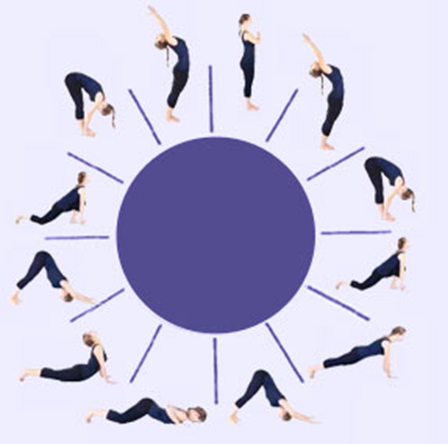
For centuries, people from all civilizations have offered prayers to the sun – the ultimate source of life and energy. One such practice is the yogic sequence of Surya Namaskar.
The Sanskrit name Surya refers to the ‘Sun’ and Namasakara means ‘salutations’. In Yoga Sun is represented by ‘pngala’ or ‘surya nadi’, the pranic channel which carries the vital life-giving force.
Surya Namaskar is a group of asanas and not part of traditional Hatha Yoga. It was introduced later in Yoga practice. However it is very effective way of loosening up, stretching, massaging and toning all joints, muscles and internal organs of the body. Today, Surya Namaskar is one of the best routines that Yoga offers. Surya Namaskar is a complete ‘Sadhana’, spiritual practice that includes asana, Pranayama, mantra and meditation techniques.
Practicing Surya Namaskara
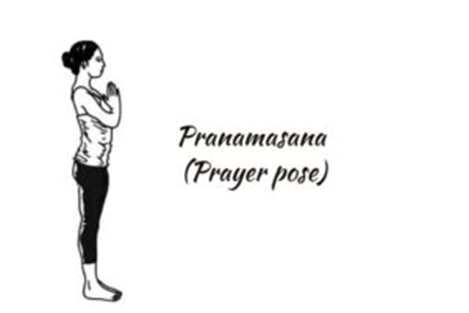
Sthiti: Tadasana with Namaskara mudra
Stand with your feet together (or shoulder-width apart) and your arms folded in Namaskar mudra(Prayer position).
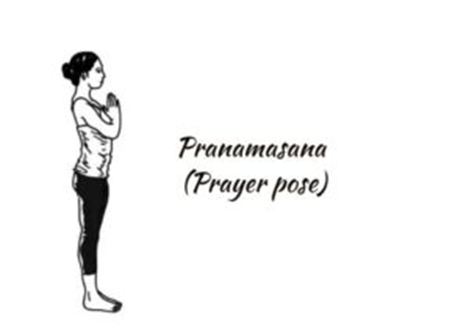
Practice: Following is a 10 Step Routine of Surya Namaskar
1: Hastautthanasan (Raised arms pose or Upward salute)
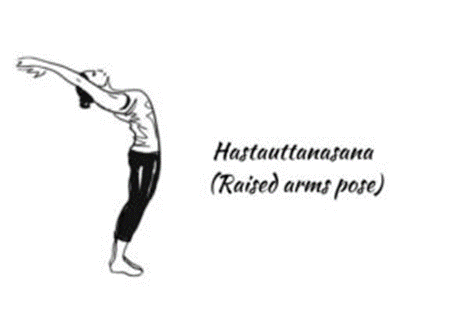
Inhale, raise both the arms straight up & alongside your ears. Gaze slightly upward, lifting your chest and leaning your upper body slightly back.
2: Hastapadasan (Standing forward bend)
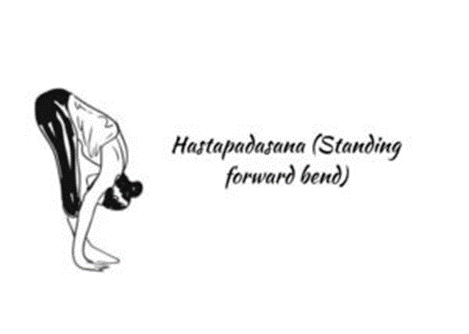
Exhale, spread the arms sideways and bend forward from the hips, bringing chest closer to thighs. Let your shoulders and neck relax. Your hands can rest on your shins, ankles, or blocks. Keep knees straight.
3: Ashwa sanchalanasan (Equestrian pose)
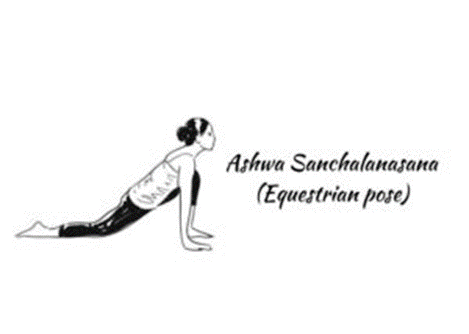
Inhale as you lift your chest parallel to the mat, bend the legs from knees and let the buttocks come parallel to floor. Place both the palms beside the feet. Stretch right leg back as far as comfortable and grasp the floor with the toes. Place right knee on the floor. Left foot remain on floor. Keep arms straight. Lift chest away from the left thigh, gazing upward to the eyebrow center or close eyes keeping awareness to the Ajna chakra.
4: Dandasana (Plank pose)
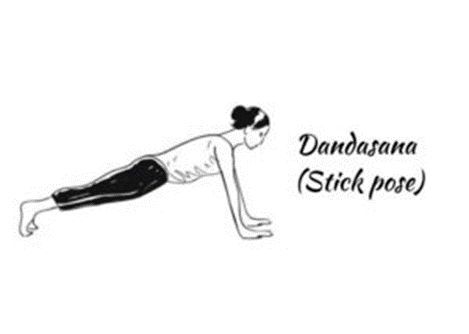
Keep the hands and right foot still and exhaling, take the left leg behind beside the right foot. Keep buttocks, shoulders and head aligned to make a plank-like position.
5: Ashtang namaskar (salute with eight parts or points)
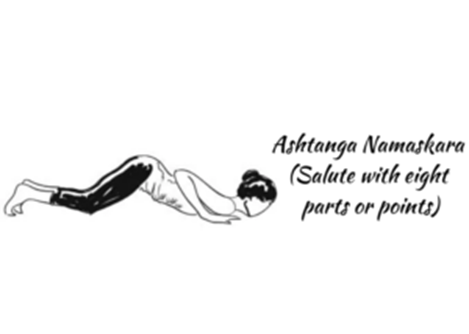
Exhale, keep your knees on floor and bend your elbows as you slowly lower your entire body, keeping your back straight. Hug your elbows in toward your sides and touch chest and chin to the floor when you find a right angle between your upper and lower arms. Gaze down and slightly forward This is final position. The toes, knees, chest chin and the two palms are on the floor, hence called Ashtanga Namaskar. The buttocks, abdomen and hips will remain raised, away from floor.
6: Bhujangasan (Cobra Pose)
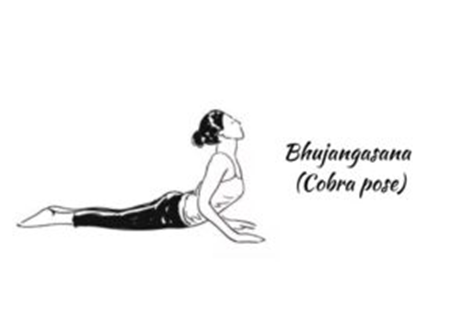
Inhale and draw your chest forward and up. Roll your shoulders back, pressing palms on the floor, raise body till the naval region. Hips and thighs will remain on the floor. Arms support the trunk. Gaze straight ahead or slightly up. In case of less flexibility, arms can be slightly bent from elbow.
7: Parvatasana (Mountain pose)
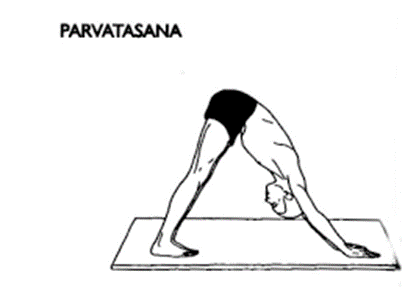
Exhale as you lift your hips up and back, coming into Parvatasana. Press down through your knuckles, lengthen through your back, and release your heels toward the mat. (Don’t worry if your heels don’t touch the mat. Just let your heels feel heavy. If your hamstrings are tight, bend your knees as much as needed.) Remain here for several breaths.
8: Ashwasanchalanasan (Equestrian pose)
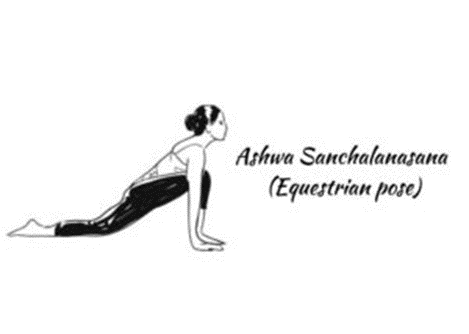
Inhale, bring your right foot forward between your hands in Ashwasanchalanasana .
9: Padahastasana(Standing forward bend)
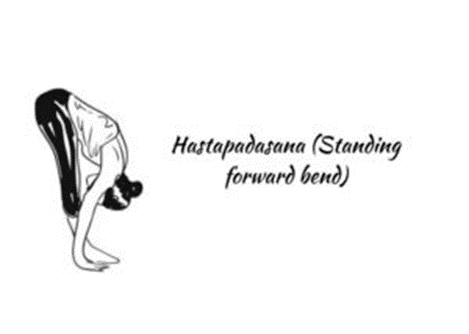
Exhale and step forward at your left leg into Hasta Padahastasana.
10: Hastautthanasan (Raised arms pose or Upward salute)
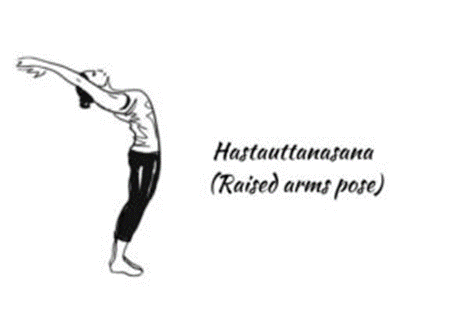
Inhale and reach your arms out to the sides and overhead into Hasta Utthanasana once again.
Return to Sthiti – Tadasana with Namaskara mudra
Benefits of Surya Namaskara:
- Helps loosen the joints and muscles, removes stiffness and lethargy in body
- Improves blood circulation in body
- The combination of all asanas performed as cyclic practice has many health benefits such as weight-loss, vitalizing the entire body, sharpening the mind and reaching optimal health
- Surya Namaskara regulates all the systems of the body – reproductive, circulatory, respiratory and digestive systems, and others
- Its influence on endocrine system helps to balance transition period between childhood and adolescence in growing children
- Regular practice of Surya Namaskar helps women regulate irregular menstrual cycles and assist in childbirth. Further, it helps the face glow and also prevents wrinkles.
- Psychologically, it regulates the interconnectedness of body, breath, and mind
- Makes one calmer and boosts energy levels with sharpened awareness
- Reduces stress level
Note:
- Any one suffering from hernia, spinal disorders, high blood pressure should practice Surya Namaskar only after consulting a physician
• Women during menstruation, prenatal and postnatal conditions should avoid this practice or practice
with caution only after their doctor’s conditional approval.
—————————————————————*****———————————————————-

